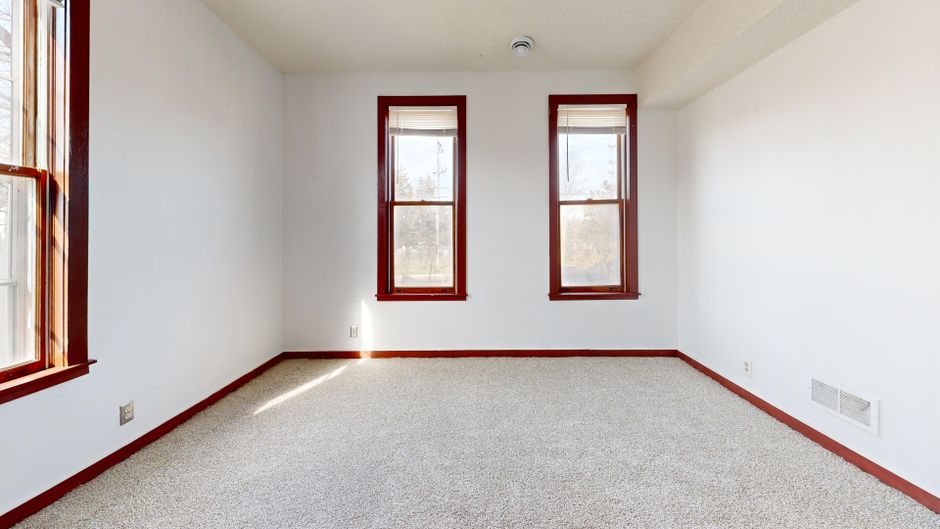
I still remember the first time I convinced a realtor friend to skip the physical staging company. She was staring at a $2,400 invoice for a three-bedroom condo, and I was staring at her raw listing photos. I told her, "Give me a weekend, a laptop, and an espresso machine." We saved her two grand, the house sold in four days, and I officially became the person who lives in virtual staging platforms.
After logging over 200 hours testing a dozen different platforms—from manual editing suites to the latest AI-driven "one-click" wonders—I’ve learned one absolute truth: Audience targeting staging isn't just a gimmick; it’s a surgical tool for your listing strategy. But before we get into the "why," I have to ask: Did you reshoot the photo first? Because no amount of digital magic can fix a blurry, dark, or vertical-angle disaster.
The Power of Style Switching: Targeting Your Ideal Buyer
Physical staging is a blunt instrument. You rent a mid-century modern set, and that’s what your house looks like for the next three weeks. Virtual staging allows for style switching. You can run two versions of the same photo: one staged in "Warm Transitional" for local families and one in "Modern Minimalist" for young urban professionals.
When you align your aesthetic with specific buyer demographics, Check over here you aren't just decorating; you’re selling a lifestyle. A vacant room is a void; a staged room is a vision. If your target buyer is a tech worker, a sleek, glass-desk home office setup will stop their thumb on Zillow. If your buyer is a retiree, a cozy reading nook with warm, soft textures does the trick.

Virtual Staging vs. Physical Staging: The ROI Breakdown
Let’s talk numbers. Physical staging requires renting furniture, paying for delivery, installation, and storage. It’s a logistical nightmare that costs thousands. Virtual staging, meanwhile, is agile. Here is how the costs generally stack up:
Cost and Turnaround Comparison
Method Est. Cost Turnaround Time Flexibility Physical Staging $2,000 - $5,000+ 3-5 Days (scheduling) Low (locked in) Virtual Staging $32 - $48/image 24-48 Hours High (style switchable)With providers like BoxBrownie charging roughly $32-48 per staged image, you can stage an entire five-room property for the price of a single physical "sofa and rug" rental. Plus, with a 24-48 hour turnaround, you aren’t waiting for a moving truck to clear your calendar.
The "Photo Realism" Trap: Why Your Shadows Matter
I hate to be the bearer of bad news, but if the furniture scale is wrong or the shadows don't align with the window, you’ve just created a "catfish" listing. Buyers aren't stupid; they know when something is virtual, but they feel lied to when the perspective is warped.
In my 200+ hours of testing, I’ve compiled a list of "Rooms That Break AI" that you should avoid or edit with extreme caution:
- Dark Rooms: AI often struggles to calculate light sources, leading to furniture that looks like it’s floating in a void. Narrow Kitchens: The perspective distortion makes "staged" kitchen islands look like they belong in a dollhouse or a banquet hall. Awkward Angles: If your photo isn't eye-level, the furniture will look like it's sliding off the floor.
Pro-tip: If the AI can't get the shadows right, don't use the photo. Fake-looking shadows are a trust-killer. If a buyer doesn't trust the zillow profile photo best practices photos, they won't trust the foundation, the roof, or the inspection report.
Workflow and MLS Disclosure Rules
Listen, I’m a freelancer, not a lawyer, but I know this: Disclosure is non-negotiable. Most MLS boards have strict rules about how you disclose virtual staging. If you are using digital tools to swap out flooring, change wall colors, or add "virtual furniture," you must ensure it’s clearly labeled in the photo description or the listing remarks.
My workflow is a strict 48-hour cycle:
Day 1 (30 minutes): Review original photos. Reject anything with bad lighting or awkward angles. Send "gold" images to the staging team. Day 1 (2 hours): Send precise instructions (e.g., "Use a rustic farmhouse style, light grey rug, neutral sofa"). Day 2 (24 hours): Receive staging, review for shadow consistency and scale. Day 3 (30 minutes): Final verification of disclosure language before uploading to the MLS.Final Thoughts: Don't Stage a Bad Photo
I see it every day: agents paying to stage a photo where the photographer stood in a corner and captured half a door frame. It’s like putting a tuxedo on a stray cat—the cat is still a stray, and now it’s uncomfortable. Did you reshoot the photo first? If the room looks bad empty, it will look like a "fake" room when staged. Invest in a professional photographer first, then invest in virtual staging to bring the vision to life.
Virtual staging is the greatest tool in a realtor’s belt for audience targeting, but it requires discipline. Keep your scale tight, your lighting consistent, and your disclosures clear. Do that, and you’ll see the conversion rates that justify every penny spent.